

A Big Candy casino Plinko
Introduction
Plinko looks simple enough to explain in one sentence: you drop a ball from the top of a board, it bounces through a field of pegs, and it lands in a slot with a multiplier. But that short description does not tell a player what the session actually feels like, where the tension comes from, or why this format has become so visible on modern casino platforms. On the A big candy casino Plinko page, the appeal is not built around story, symbols or bonus rounds. It is built around direct cause and effect, fast outcomes and a clear visual link between chance and result.
Before any real money is involved, check the game’s volatility setting and the house edge range, since Plinko payouts swing widely between low and high risk modes. A quick look at the provider’s paytable for the specific version you are playing will show the multiplier spread, which tells you how often small wins land versus how rarely the top prizes hit. It also pays to confirm the minimum bet per drop, because some casinos set a floor that makes the fast-paced rounds less flexible than they first appear. Finally, glance at the session history or demo mode first — most operators offer a free-play variant, and a few minutes there reveals whether the pacing suits your bankroll before you commit.
This review stays focused on that practical side. I will break down how Plinko works, what the movement of the ball really means for the outcome, how risk settings reshape the whole session, and where the strengths and limits of the format become obvious after more than a few drops.
What Plinko is and why it stands out so quickly
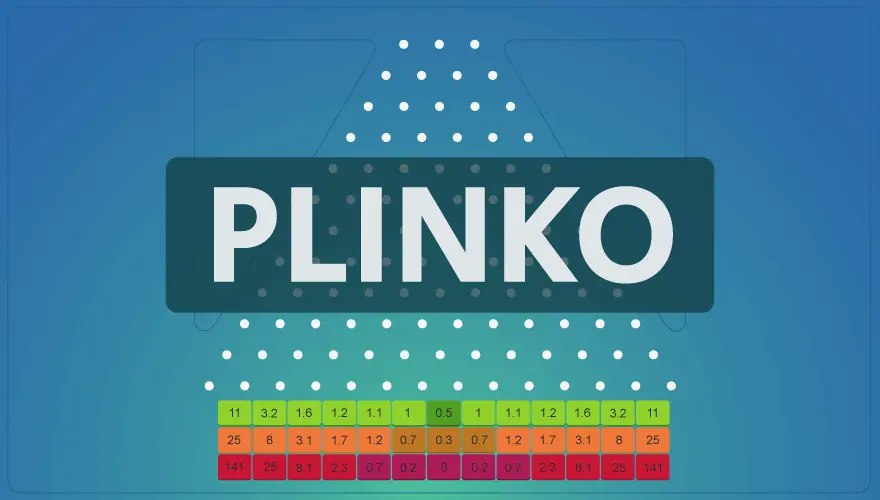
Plinko is a casino game built around a vertical board filled with pins or pegs. The player chooses a bet, often selects a risk mode, and releases a ball from the top. As the ball hits peg after peg, it shifts left or right until it reaches one of the payout slots at the bottom. Each slot has its own multiplier, and the final return is simply the stake multiplied by the value of that slot.
That sounds almost too basic, but the format stands out because the simplicity is deceptive. There are no reels to read, no paytable combinations to memorise, and no long build-up before the result appears. Every drop is visible from start to finish. The player sees the ball travel, watches it flirt with higher multipliers near the edges, and experiences a very immediate form of suspense. In practical terms, this makes Plinko easier to enter than many other A Big Candy Casino games tips, but not necessarily easier to manage responsibly.
Another reason Plinko became so noticeable is that it is highly legible on screen. Even someone who has never played before can understand the objective in seconds. That matters more than it may seem. Many casino products ask the player to learn a system first and only then start feeling the tension. Plinko reverses that order. The tension arrives instantly, and deeper understanding comes later.
One of the more interesting observations about Plinko is this: the board looks honest because everything is visible, yet the outcome distribution can still surprise players who assume visibility means control. Watching the ball bounce does not mean you are reading the result in advance. In fact, the visible path often creates a stronger emotional reaction precisely because it feels almost readable, right up until the final ricochet changes everything.
How the Plinko mechanic actually works on the page
The drop itself is where the real action happens, but the setup before it matters just as much on the Plinko page at a big candy casino. You pick your stake first, then settle on the board conditions that version actually offers — typically that means the number of rows and a risk level, though the exact range varies from one release to the next. Most implementations let you tweak these before every single drop rather than locking you into a fixed configuration, which keeps the math honest about what you are about to play. The rows determine how many pegs the ball can bounce off and, in turn, how spread out the landing slots are at the bottom. Risk settings shift the payout multipliers attached to those slots, so a higher risk usually means a bigger spread between the top and bottom payouts, while lower risk tightens that range. What you are really choosing is volatility, not pure odds — the house edge stays baked into the multiplier table regardless of your selections. Once the ball is released, the path is pure physics and randomness, and the payout lands according to the slot it finally rests in, with the multiplier already fixed from your pre-drop choices.
bet size
number of rows on the board
risk level, often low, medium or high
manual or auto-play style of dropping
Once the ball is released, it collides with a sequence of pegs. At each contact point, the path shifts left or right. The final slot determines the multiplier. Lower values tend to cluster toward the centre, while larger multipliers are often placed near the outer edges. That layout is important because it creates the basic logic of the game: central outcomes are more common, edge outcomes are rarer, and the biggest returns are usually attached to the least frequent landing zones.
The number of rows matters because it changes how many directional decisions the ball effectively makes before it reaches the bottom. More rows generally mean a broader spread of possible outcomes and a wider multiplier map. Fewer rows compress the path and often produce a tighter distribution. This does not remove randomness, but it changes how that randomness is expressed over a session.
Risk level matters even more. In low-risk mode, the multiplier table is flatter. You tend to see more modest outcomes and fewer extremes. In high-risk mode, the central slots may return very little, while the outer slots can carry dramatically larger multipliers. The result is not just “more danger” in an abstract sense. It changes the emotional profile of the session. A low-risk setup often feels steadier and less punishing from drop to drop. A high-risk setup can produce long dry stretches interrupted by occasional sharp spikes.
| Setting | What it changes | What it means in practice |
|---|---|---|
| Bet size | The monetary value of each drop | Controls how quickly balance swings become noticeable |
| Rows | The length and spread of the ball path | Affects the shape of the outcome distribution |
| Risk level | The multiplier map across the board | Changes whether the session feels steady or sharp-edged |
| Auto mode | The speed and repetition of drops | Can accelerate both entertainment and losses |
What matters here is that Plinko is not a passive spectacle. The player is not choosing the path of the ball, but they are choosing the framework that defines the session. Those choices shape the range of likely outcomes, the pace of bankroll movement and the kind of variance the player is exposing themselves to.
Why the pace feels so different from many other casino formats
Plinko has a distinctive rhythm. A single round is short, visually clear and emotionally concentrated. There is no dead time waiting for a reel set to stop or for a bonus feature to trigger. The entire cycle from stake to result is compressed into a few seconds. That speed is one of the game’s strongest selling points, but it is also one of the first things a player should treat with caution.
On a practical level, fast resolution changes how people perceive value. In a slot, a player often waits for combinations, near-misses, scatter symbols or feature teases. In Plinko, each drop is the full event. There is no separate bonus round carrying the excitement later. The excitement is in the path itself and the landing point at the end. That makes the game feel clean and immediate, but it can also encourage repeated drops without much pause between them.
I would describe Plinko’s tempo as “quick enough to feel harmless, fast enough to become expensive.” That contrast is easy to miss at first. Because the interface is minimal and the action is easy to read, the session can feel lighter than it really is. Yet if a player uses auto mode or raises stake size while chasing larger multipliers on a high-risk board, the bankroll can move very quickly.
There is also a subtle psychological effect here. In slots, players often blame or credit symbols and bonus timing. In Plinko, the ball path is visible, so each result feels more personal even though the underlying randomness remains outside the player’s control. That visual journey creates a stronger sense of “almost” moments. A ball can appear to be drifting toward a high multiplier, then bounce inward at the last second. Those tiny reversals are a major part of the game’s grip.
Risk levels, probabilities and what a player should realistically expect
Plinko is often introduced as an easy game to understand, and visually it is. Statistically, however, it deserves more respect than that first impression suggests. The important thing to understand is that probability in Plinko is not evenly distributed across the board. The central slots are usually more likely because there are more possible paths that lead into them. The outermost slots, where the largest multipliers often sit, are much less likely to be hit.
This is where many new players make the wrong assumption. They see the biggest multiplier on the screen and mentally give it more weight than the mathematics justify. In reality, the top-end return is the rare event that gives the board its drama. It is not the result a player should expect to see regularly, especially on higher-row and higher-risk setups.
To make this practical, here are the main points a player should understand before starting:
High multipliers are usually edge outcomes, and edge outcomes are uncommon.
Low-risk mode generally reduces the size of extremes but can produce a smoother session.
High-risk mode may create long sequences of small or poor returns before a strong hit appears.
Fast rounds can hide how much has been staked over a short period.
A visible ball path does not provide usable prediction for the next drop.
That last point matters. Some players begin to read patterns into recent results because the board is visual and each drop feels tangible. But Plinko is not a puzzle where the player learns the board and gains predictive control. The visible movement is part of the presentation of randomness, not a signal that the player can out-read the system.
If I had to sum up the risk profile in one line, I would say this: Plinko can be gentle when configured conservatively, but it can become one of the more abrupt balance-swing experiences on a casino site when pushed into high-risk settings. The same game can feel casual to one player and severe to another simply because the setup changes the entire distribution of results.
How Plinko compares with slots and other common casino games
The clearest difference between Plinko and classic online slots is structural. Slots are built around reels, symbol combinations, paylines, cluster systems or feature triggers. Their excitement often depends on layered events: base spins, bonus activation, free spins page for active A Big Candy Casino players, expanding symbols, multipliers and so on. Plinko strips all of that away. One drop equals one outcome. There is no second stage.
This changes player expectations in several ways. A slot player may accept long stretches of standard spins because the session is partly about waiting for a feature to unlock. In Plinko, there is no such build-up. If the drops are not engaging on their own, the format quickly loses its appeal. That is why Plinko tends to suit players who value immediacy over progression.
Compared with blackjack review for New Zealand players, the difference is also sharp. Blackjack and baccarat give the player a more recognisable decision framework or at least a more traditional house-edge discussion. Roulette has a familiar wheel logic and fixed bet types. Plinko sits in a different space. It is less strategic than blackjack, less ceremonial than roulette, and less layered than slots. Its identity comes from pure visual chance compressed into short, repeatable rounds.
| Format | Main source of tension | Session feel | Best suited to |
|---|---|---|---|
| Plinko | Ball path and final landing slot | Fast, direct, swingy depending on setup | Players who want immediate outcomes |
| Slots | Reel outcomes and feature triggers | Layered, variable, often longer-form | Players who enjoy bonus progression |
| Roulette | Single wheel result | Structured and familiar | Players who prefer classic bet formats |
| Blackjack | Card decisions and dealer outcome | Slower, more deliberate | Players who want some decision input |
One memorable thing about Plinko is that it can feel more transparent than a slot while being no less capable of producing harsh short-term variance. The board is open, the movement is visible, and the result is easy to understand. Yet none of that softens the statistical reality. Transparency of presentation is not the same as softness of outcome.
Where the game delivers value and where its limits show
Plinko has several genuine strengths. First, it is accessible. A new player can understand the interface almost immediately. Second, it is efficient. There is very little friction between deciding to play and seeing a result. Third, it gives the player a meaningful setup choice through risk level and board configuration, which can make the session feel more tailored than a one-size-fits-all format.
There is also a strong entertainment case for players who like visual suspense without learning a heavy ruleset. The movement of the ball is not decorative. It is the centre of the experience. That makes even short sessions feel active and easy to follow.
But the limits are just as real. Plinko does not offer narrative depth, evolving bonus structure or long-form progression. If a player enjoys unlocking stages, collecting symbols or waiting for a free spins round to transform the session, Plinko may feel too bare after the novelty wears off. Its simplicity is both the hook and the ceiling.
Another limit is that the game can create a misleading sense of control. Choosing rows and risk settings is meaningful, but it does not make the outcome manageable in the way some players hope. You are shaping the profile of chance, not mastering it. That distinction matters because players sometimes move to higher risk believing they are simply “turning up the excitement,” when in practice they are also increasing the chance of rough sequences.
In short, Plinko is strong when judged as a fast, visual, high-clarity chance format. It is weaker if judged as a deep, evolving experience with strategic layers.
Who Plinko is likely to suit and who may not enjoy it for long
Plinko tends to work well for players who want short rounds, clear rules and instant feedback. It is especially suitable for people who do not want to study paylines or bonus systems before placing a bet. If you enjoy seeing the result unfold in front of you and prefer a direct relationship between stake and multiplier, this format makes sense.
It may also suit players who like adjusting the tone of a session through risk settings. On the A big candy casino Plinko page, that flexibility can be one of the most useful aspects of the experience. A cautious player can keep the setup relatively measured, while a more aggressive player can choose a sharper distribution and accept the consequences that come with it.
On the other hand, Plinko may not be the right fit for everyone. It can quickly feel repetitive for players who need thematic immersion or feature variety. It can also frustrate anyone who mistakes visible motion for strategic depth. If you want a slower game with more time to think, or if you prefer systems where your decisions carry clearer tactical weight, other formats may be a better match.
For some players, Abigcandy casino users included, the deciding factor will simply be session style. Plinko is not a game you sink into for atmosphere. It is a game you dip into for concentrated bursts of chance. If that sounds appealing, it has a clear place. If not, the simplicity may feel thin rather than elegant.
What to check before launching a real-money session
Before playing Plinko for real money, I recommend focusing on a few practical points rather than on the headline multiplier alone. Before you make a deposit, it is worth reading Gates of Olympus slot guide for the fee and speed details.
Check the available risk modes and understand how sharply they change the outcome profile.
Look at the row settings, because board depth affects how spread out the results can be.
Set a stake that matches the speed of the game, not just your balance.
Be careful with auto-play if you have not yet felt the real pace of the session.
If a demo mode is available, use it to understand the rhythm rather than to chase a lucky sample.
The most practical advice I can give is to judge Plinko by session behaviour, not by isolated highlights. A single large multiplier can distort a player’s memory of the game. What matters more is how often the board returns modest values, how quickly the drops accumulate, and whether the chosen setup matches your tolerance for swings.
This is particularly important in New Zealand-facing play, where many users are comparing modern instant-win style products with classic slots and table games. Plinko can look lighter than those formats, but in balance terms it should be treated with the same seriousness. The interface is simple. The bankroll impact is not automatically simple.
Final verdict on A big candy casino Plinko
A big candy casino Plinko offers a very specific kind of casino experience: fast, visual, stripped back and heavily defined by how the player sets the board before each drop. Its strongest quality is clarity. You immediately understand what is happening, and every result is easy to read. Its second major strength is flexibility. Risk level and board depth can make the same format feel relatively calm or distinctly aggressive.
That said, the game deserves a realistic reading. The simplicity of the interface should not be confused with low intensity. Plinko can move quickly, and high-risk setups can produce harsh short-term swings. The visible path of the ball adds drama, but it does not add predictability. Players who understand that distinction are much more likely to enjoy the format for what it is rather than chase what it is not.
For the right player, Plinko is compelling because it removes clutter and delivers immediate suspense. For the wrong player, it may feel repetitive, too exposed to abrupt variance, or too thin compared with feature-rich slots. That is why I see it as a strong specialised option rather than a universal recommendation. If you want direct outcomes, clean presentation and a session style you can shape through risk settings, Plinko is worth trying. If you want longer arcs, richer features or more strategic involvement, another format will probably serve you better.
In the end, that is the honest value of A big candy casino Plinko: not a miracle game, not a substitute for every other casino format, but a focused chance-based experience that can be highly engaging when approached with the right expectations and sensible control.
FAQ
How does Plinko work on the site?
A ball drops from the launcher and bounces through pegs until it lands in a scoring zone with a multiplier.
What should players check before launching Plinko for real-money play?
Confirm the mode shows real-money play, and check the table or game limits displayed near the Plinko game area. Review any wagering or bonus-related conditions if a promo code is active. Ensure account login is completed so the results are saved correctly.
What is demo mode in Plinko and how is it different from real-money rounds?
Demo mode lets players practice the ball drops and multiplier outcomes without affecting the real balance. Real-money play uses the same Plinko mechanics, but the stakes and any bonus funding rules apply. Switching between modes may require re-opening the game window so the status updates.
What happens if the Plinko game window shows a loading spinner and never starts?
Refresh the game lobby and try opening Plinko again from the game list. A stable connection matters for quick launch, especially on mobile data. Logging out and back in can also help if the session token expired.
How does the current mirror affect Plinko access?
Mirror access provides an alternative route if the main connection is slow or unavailable. The game mechanics remain the same, but the current mirror status may change throughout the day. If Plinko does not open, switching to a working mirror is typically the fastest backup step.
What is the difference between Plinko and live casino table games on the site?
Plinko is a self-contained casino game with automated ball drops and multiplier outcomes. Live casino tables involve a dealer and real-time interaction cues, so the pacing and interface differ. If a player prefers quick launch rounds and predictable controls, Plinko is usually the faster option to start.
